Better hearing without the clinic price tag: our 2026 OTC hearing aid buyer’s guide
Since 2022, adults with mild to moderate hearing loss can buy real hearing aids without a prescription. Here’s how to tell the good ones from the gimmicks, and the pair we’d point most first-time buyers to.
HDBy The Hearing Desk editors Updated October 18, 2026 · 9 min read
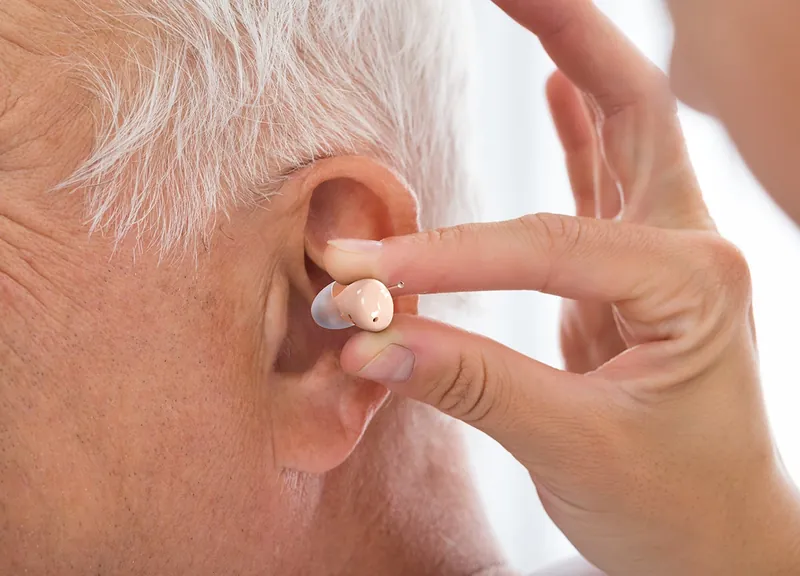
A busy restaurant is one of the first places many people notice they’re missing parts of the conversation. Photo: Audien Hearing.
Key takeaways
OTC hearing aids are an FDA-regulated category, created in 2022, for adults 18+ with perceived mild to moderate hearing loss. No exam or prescription required.
They aren’t the same as cheap “sound amplifiers,” which turn up everything, background noise included.
What matters most: a real hearing aid, an all-day rechargeable battery, a comfortable fit, a long return window and human support.
Our pick for most first-time buyers: the Audien Atom Air. $149 a pair, no app needed, 24-hour battery and a 45-day money-back guarantee.
For decades, the only route to hearing aids in the U.S. ran through a clinic: a hearing exam, a fitting appointment, follow-up adjustments, and a price that bundled all of that service into the device itself.
In 2022 the FDA created a new over-the-counter (OTC) hearing aid category. Adults with perceived mild to moderate hearing loss can now buy hearing aids directly, online or off a store shelf, with no exam, prescription or fitting appointment.
That matters because many people who could use hearing aids still don’t have them:
37.5MU.S. adults report some trouble hearing
28.8MU.S. adults could benefit from using hearing aids
<1 in 3adults 70+ who could benefit have ever used them
Hearing affects more than conversation. In the 2023 ACHIEVE study, summarized by the NIH, a hearing intervention slowed the rate of cognitive decline over three years by 48% in older adults at higher risk of dementia. It didn’t show a significant effect in the overall study group, and researchers are still studying the link.
Know roughly where you are
OTC hearing aids are built for a specific range. A rough sense of yours helps you buy the right thing:
OTC range
Mild
Soft voices and quiet speech get lost, especially in noisy places like restaurants.
OTC range
Moderate
You often ask people to repeat themselves and keep the TV louder than others like.
Severe or profound
Even raised voices are hard to follow. OTC aids aren’t designed for this; see a hearing professional.
Not sure? A free online hearing screener can give you a rough idea. It isn’t a diagnosis, but you don’t need one to buy an OTC hearing aid.
Three kinds of devices that look alike but aren’t
Search for “hearing aids” and you’ll see products from $20 to $7,000. They fall into three very different groups:
Sound amplifiers (PSAPs)
Often under $100
Sold for things like birdwatching. They aren’t hearing aids and aren’t meant to treat hearing loss. Most simply make everything louder, noise included.
Sweet spot for most
OTC hearing aids
Roughly $100 to $1,000+ a pair
FDA-regulated hearing aids for adults with perceived mild to moderate loss. You set them up yourself; many brands offer remote help.
Prescription hearing aids
Often thousands a pair
Fitted and adjusted by a professional to your hearing test. The right call for severe loss or complex needs, and the price includes that service.
For mild to moderate loss, the decision for most people is no longer “clinic or nothing.” It’s which OTC pair to buy.
What to look for before you buy
Marketing in this space is loud. These six things are what actually decide whether a pair gets worn or ends up in a drawer:
It’s a hearing aid, not an amplifier. Look for “OTC hearing aid” on the box and listing.
A full-day rechargeable battery. Tiny disposable batteries are fiddly. Aim for a pair that lasts your whole waking day on one charge.
Controls you’ll actually use. If you don’t want to manage a smartphone app, choose a pair that works without one.
A comfortable, discreet fit. Several ear-tip sizes matter. An uncomfortable pair won’t get worn.
A long, no-hassle trial. It can take a few weeks to get used to hearing aids. Look for at least 30 days; 45 or more is better.
Real support. A U.S.-based team you can reach makes setup and troubleshooting far easier.
Why OTC pairs cost a fraction of clinic prices
A clinic price usually bundles the device with exams, fittings, follow-up visits and the clinic’s overhead. Direct-to-consumer brands sell the device itself and support you remotely, which is why prices can start in the low hundreds.
The trade-off: you do more of the setup yourself. For mild to moderate loss, most people find that easy.
Our top pick
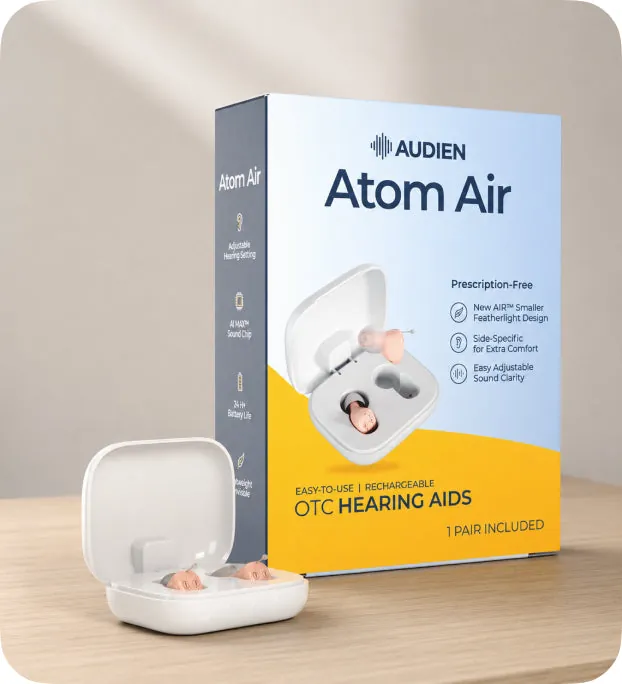
Audien Atom Air: the easiest low-risk place to start
Measured against the checklist above, the Atom Air ticks the boxes that matter most to first-time buyers: it’s a real OTC hearing aid, it works without an app, it lasts all day, and you have 45 days to change your mind.
Our pick for most first-time buyers · 2026
Audien Atom Air
OTC hearing aid by Audien Hearing · Arizona, USA
$149per pair on Audien’s siteOffer page: Save 33%
Best for: first-time users with mild to moderate hearing loss who want something simple, light and inexpensive.
Opens Audien’s official offer page · Free U.S. shipping on qualifying offers
What we like
One of the lowest prices we’ve seen for a rechargeable OTC pair
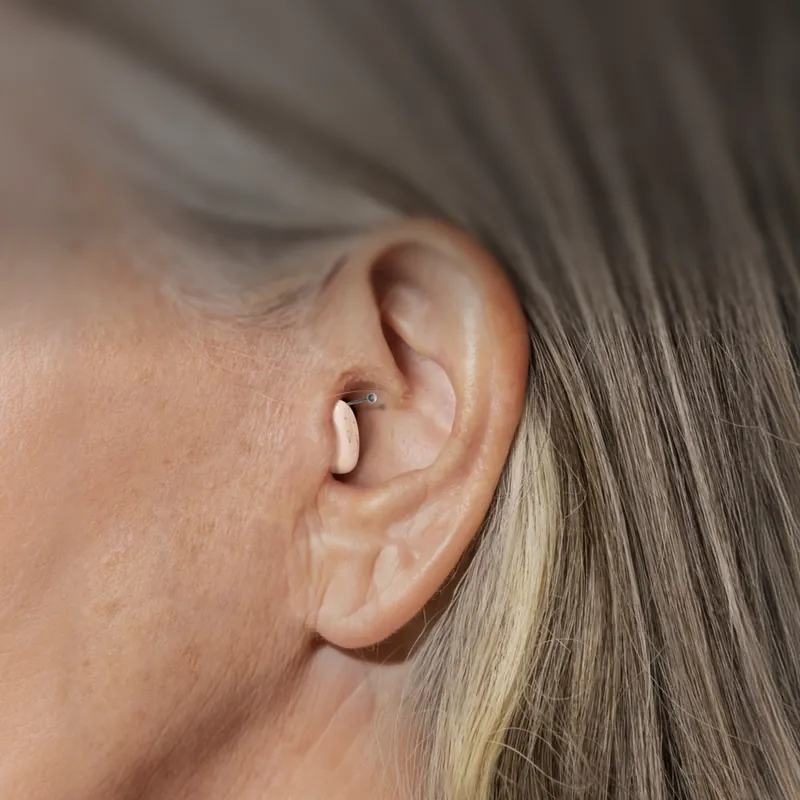
Light, in-ear shape that’s hard to spot
Works straight out of the case, with no app or pairing
Audien says it focuses on voices in front of you and keeps surrounding noise down
45 days to return it if it isn’t right
Keep in mind
No Bluetooth streaming or app fine-tuning
Not for severe or profound hearing loss
Recharging takes a few hours, so plan on overnight charging
Generally not covered by insurance
Bottom line: if your main goal is to follow conversations and the TV more easily, without learning an app or spending thousands, the Atom Air is the simplest low-risk place to start. If streaming calls and music matters to you, look at a pricier app-based model instead.
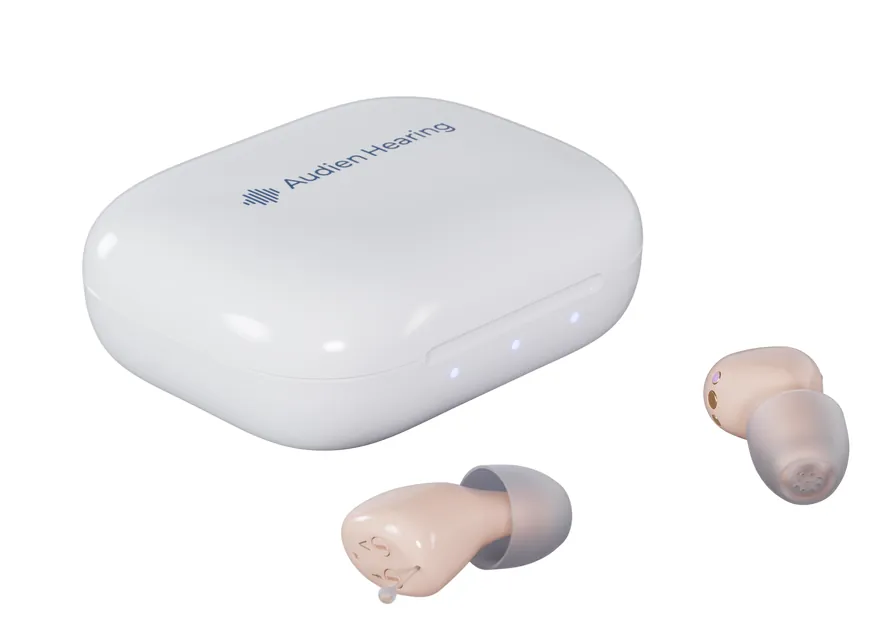
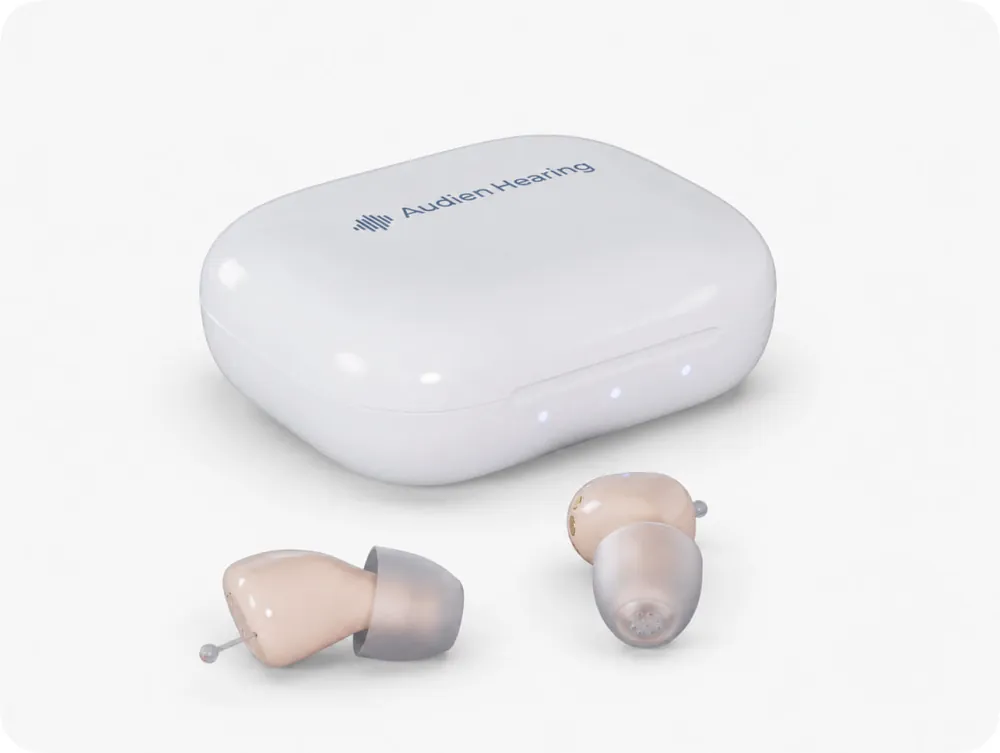
Audien built the Atom Air around a lighter in-the-ear shape. It sits in the ear rather than hooking behind it, so it stays out of the way of glasses and is hard to notice.
Sits in the ear, not behind it
Small, medium and large silicone tips for a snug fit
Thin pull line for easy removal
Made for the moments people miss most
Audien says the Atom Air is tuned to bring forward the voices in front of you while keeping surrounding noise down. That’s where mild to moderate loss tends to show up first.
Dinners and busy restaurants
Family gatherings and grandkids
TV and radio at a normal volume
Head to head
How the Atom Air compares
Here’s how it stacks up against the other ways people try to solve the same problem. Category columns describe what’s typical; individual products vary.
Swipe the table sideways to see every column →
Our pickAudien Atom Air
Prescription hearing aids
App-based premium OTC
Sound amplifiers (PSAPs)
Typical price per pair
$149
Often thousands
Often several hundred to $1,000+
Often under $100
Sold as a hearing aid
Yes, OTC
Yes
Yes, OTC
No
Exam or prescription
Not needed
Required
Not needed
Not needed
Smartphone needed
No
Varies
Usually
No
All-day rechargeable
Up to 24 hrs
Often
Usually
Varies
Voices over background noise
Designed for it
Custom-tuned
Adjustable in app
Usually louder overall
Bluetooth streaming
No
Often
Usually
Rarely
Money-back trial
45 days
Varies by clinic
Varies by brand
Varies
Best for
A simple, low-cost start for mild to moderate loss
Severe or complex hearing loss
Tech-comfortable users who want streaming
Not intended for hearing loss
Atom Air details are from Audien’s product and offer pages as of Oct 18, 2026.
These are real Trustpilot reviews of Audien hearing aids, the same ones Audien features on its offer page. Each links to the original. Some reviewers describe other Audien models, noted under their names.
“My family is so happy that I can hear again”
“Now I can participate in gatherings without the frustration of not understanding 100%… now I can watch TV at a normal volume level.”
“A wise choice”
“Both my sisters have hearing aids. The $3-$5K type… Since owning them for a month it’s made conversation and tv watching like it use to be.”
“Better than I could have hoped”
“[They] fit better, adjust more precisely, and make me forget that I am wearing them. The price is right… Top notch!”
“Customer service is great”
“The price is very affordable, even with being on a limited income. Customer service is great, and they make sure all your questions are answered.”
Audien also publishes these results from its own customer survey (all models). They aren’t from an independent study:
93%heard better in group conversations
84%found TV and radio clearer
87%felt more confident socially
89%would recommend Audien
Excerpts shortened; see full reviews on Trustpilot. Individual results vary.
Who should (and shouldn’t) buy the Atom Air
A good fit if you…
Are 18 or older
Have mild to moderate trouble hearing in restaurants, at gatherings or with the TV
Want something simple, with no app to learn
Want to try hearing aids without a big upfront cost
Would like an affordable spare pair
See a doctor first if you have…
Sudden or quickly worsening hearing loss
Hearing loss or ringing in just one ear
Ear pain, or fluid or blood from the ear
Dizziness or vertigo with hearing changes
A suspected earwax blockage or ear deformity
Severe or profound hearing loss
Not sure it’s right for you?
Answer 5 quick questions and we’ll tell you honestly whether the Atom Air fits.
Discount and final price are set by Audien and shown at checkout.
45-day money-back guarantee. Wear them for up to 45 days. If you’re not satisfied, Audien lets you return them for a refund.
Frequently asked questions
Do I need a hearing test or prescription?
No. OTC hearing aids like the Atom Air are sold without a prescription to adults 18+ with perceived mild to moderate hearing loss. A professional hearing test is still worth it if you have any of the warning signs listed above.
How is the Atom Air different from a cheap amplifier?
Audien sells the Atom Air as an FDA-registered OTC hearing aid, a regulated medical device category. Personal sound amplifiers (PSAPs) aren’t hearing aids, aren’t intended to treat hearing loss, and usually make every sound louder, including noise.
Does it need an app or a smartphone?
No. The Atom Air works straight out of the charging case with no app, account or pairing. The flip side is that it doesn’t stream phone calls or music.
How long does the battery last?
Audien rates it at up to 24 hours per charge. Most people charge them in the case overnight.
Will it fit my ears?
The Atom Air comes with small, medium and large silicone tips, so most people can find a snug, comfortable fit. Audien also sells a separate Perfect Fit Kit.
What if they don’t work for me?
Audien offers a 45-day money-back guarantee. Check the return terms at checkout for the exact process.
How long does it take to get used to hearing aids?
Sounds often seem different at first, including your own voice. Many people need a few weeks of daily wear to adjust, which is one reason a 45-day trial is useful.
Can I pay with HSA or FSA funds?
Audien accepts HSA and FSA cards on its own website. If you plan to pay that way, confirm it’s accepted at checkout on the offer page. The Atom Air is generally not covered by insurance.
Is this the official Audien website?
No. The Hearing Desk is an independent, advertiser-supported guide. Our links take you to Audien’s official offer page, run with its partner GiddyUp, where your order, shipping, returns and support are handled.
Hear the whole conversation again, for $149 a pair.